

Over 89% of banks say sustainability remains relevant in trade finance, and ICC now defines its product labels
Over 89% of banks in ADB's December 2025 survey say ESG and sustainability remain relevant in trade financing. ICC's December 2025 principles define four product types: green, social, sustainability-linked supply chain finance and sustainability-linked trade finance.

Trade finance platforms are multiplying on shared standards, with 21 eBL systems approved by shipping's P&I clubs
A trade finance platform puts the buyer's approval, the trade document and the payment on one record. The International Group of P&I Clubs lists 21 approved eBL systems, and ADB expects full digitalization to cut trade costs by 8% on average.

Most trade banks now see a role for AI in credit risk, with over 85% naming risk analysis and fraud prevention
Over 85% of bank respondents in ADB's December 2025 survey see potential use of AI for risk analysis and fraud prevention. A BIS study found machine learning predicted defaults better in a stress period, an edge that declined for customers with longer credit histories.

Thirteen jurisdictions have legislated on the UNCITRAL model law for electronic trade documents, 12 since 2021
MLETR, the UNCITRAL model law adopted on July 13, 2017, lets control of an electronic record count as holding a paper trade document. Thirteen jurisdictions have laws based on or influenced by it, and the UK Act in force since September 20, 2023 names eight trade documents.
Forged title documents drive big trade frauds, and a credit stays payable unless the beneficiary's fraud is proven
In ED&F Man v Come Harvest, $284,536,139.23 was advanced against 92 warehouse receipts the court found were forgeries. A letter of credit stays payable unless the beneficiary's own fraud is shown, and courts ask for particularly cogent evidence.

Container eBL usage reached 12.8% in November 2025, against a carrier pledge of 100% by 2030
An electronic bill of lading (eBL) is a bill of lading issued and passed on electronically. It can stand for the goods where the law treats control of the record like holding paper. Container eBL usage reached 12.8% in November 2025, against a carrier pledge of 100% by 2030.
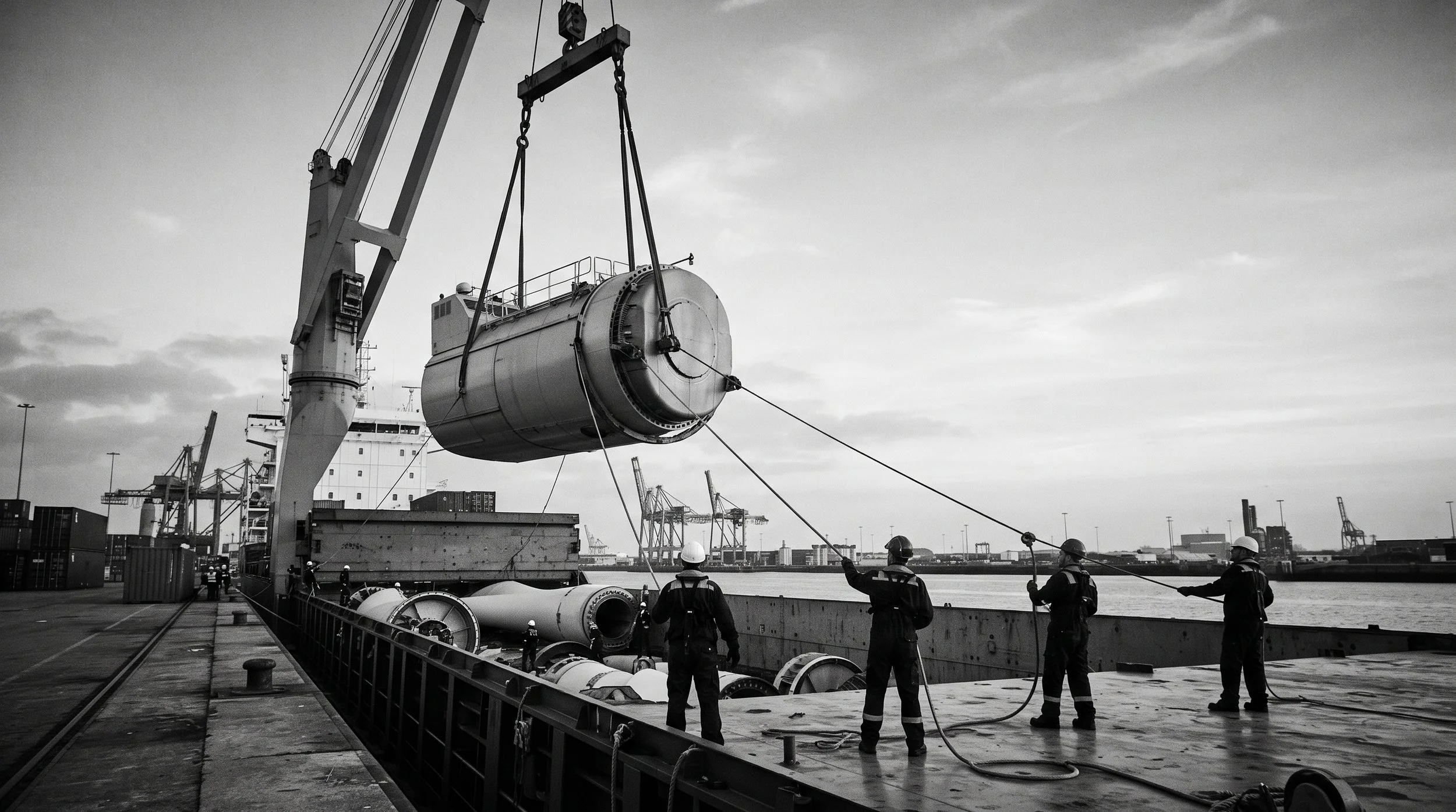
US capital goods exports hit a record $710.3 billion in 2025, and every stage of the chain is financed
US capital goods exports reached a record $710.3 billion in 2025. Industrial trade is financed at three points: supplier finance programs upstream, export credit agency terms for the foreign buyer, and dealer inventory finance downstream.
ECA-backed finance (buyer and supplier credit)
ECA-backed finance lets an overseas buyer pay for capital goods over several years. A government-backed export credit agency guarantees the bank, the buyer pays at least 15% down, and under buyer credit the exporter is paid as for a cash sale.
Tolling
Tolling finance funds raw material while a processor turns it into a finished product for a fee. The owner keeps the goods, the finance provider holds a claim over them, and the sale of the product repays the finance.
Structured commodity finance
Structured commodity finance is short-term funding for commodity stocks or sales, repaid from the sale of the goods. The provider lends part of the goods' value, holds security over them and watches them until the buyer pays.
Trade loan
A trade loan is a short-term bank loan for one import or export, repaid from the money that deal brings in. The exporter gets cash to fill the order, and the importer gets time to sell before repaying.
Purchase order finance
Purchase order finance gives a seller funds to make and ship a buyer's order, often in stages, and the buyer's payment repays the provider. See who does what, the steps, a worked example and when it fits.
Prepayment finance
In prepayment finance, a buyer pays the producer in advance, with a bank's money or its own, and the producer pays it back with future deliveries. The bank's security is the buyer's rights under the prepaid contract.
Pre-export finance
Pre-export finance pays an exporter before the goods ship. The lender rests on the assigned export contract, the buyer pays the lender directly, and the loan is settled from that payment, with any surplus going to the exporter.
Asset-based revolving facility
An asset-based revolving facility is a line of funding you can draw, repay and draw again. Its limit is a set share of the receivables and stock that qualify, so it rises and falls as they do.
Warehouse finance (warehouse receipts)
Warehouse finance lets the owner of stored goods raise a short-term loan against a warehouse receipt. The lender pays out part of the goods' value, holds title until repaid, and the buyer collects the goods once the loan is cleared.
Inventory finance
Inventory finance pays you part of the value of goods you hold before sale. The finance provider keeps title or security over the goods and gives it back when the sale money repays the advance.
Distributor finance
Distributor finance funds a distributor's stock of a large manufacturer's goods until the distributor's own customers pay. The finance provider takes rights over the stock and invoices, and the manufacturer can back the program with a stop-supply letter or buy-back guarantee.
Dynamic discounting
In dynamic discounting, the buyer pays its sellers' approved invoices early from its own cash, and takes a discount that shrinks as the due date gets closer. The seller chooses when to be paid, while the buyer has spare cash.
Payables finance (approved payables, reverse factoring)
In payables finance, a buyer sets up a program so its suppliers can sell approved invoices to a finance provider and get paid early, at a cost based on the buyer's credit. The buyer still pays the full invoice on the original due date.