
Trade credit insurance
Trade credit insurance pays an exporter most of an unpaid invoice when a foreign buyer fails to pay for a covered commercial or political reason. The exporter pays a premium and keeps a small share of each loss.
Forfaiting
Forfaiting lets an exporter sell the importer's promise to pay later, such as a promissory note or bill of exchange, to a forfaiter for cash now, without recourse. It suits long credit on capital goods, commodities and large projects.
Invoice discounting
Invoice discounting lets a seller sell its unpaid invoices to a finance provider and get the discounted value early, while it keeps running its own customer accounts. The buyer pays on the due date, and the deal can stay confidential.
Factoring
Factoring lets an exporter sell its unpaid invoices to a factor and get around 80% of the value up front, with the rest when the buyer pays. With non-recourse factoring, the factor also takes the risk that the buyer cannot pay.
Bank payment obligation (BPO)
A bank payment obligation, or BPO, is the buyer's bank's promise to pay the seller's bank once the order, transport and invoice data match. Banks deal only with data, and both banks must use the same matching system.
Bill of exchange and promissory note
A bill of exchange is a seller's signed order for the buyer to pay a fixed sum; a promissory note is the buyer's signed promise to pay. Both can fall due on a set date and can be passed on or sold for cash before then.
Documentary collection, documents against acceptance (D/A)
Under documents against acceptance (D/A), the importer gets the shipping documents by signing a draft that promises payment on a set later date. The exporter gives time to pay and holds a signed promise, while the banks move the papers and take no risk on the buyer.
Documentary collection, documents against payment (D/P)
In a D/P documentary collection, the banks hold the shipping documents until the importer pays at sight. The exporter keeps control of the goods by sea, but no bank promises to pay.
Demand guarantee (bank guarantee)
A demand guarantee is a bank's promise to pay the other side of a contract on a demand that meets its terms. The beneficiary gets cover from a bank. The applicant carries the risk of a demand it disputes.
Standby letter of credit
A standby letter of credit is a bank's backup promise to pay if one side fails to pay or perform. The exporter can sell on open account with a bank to fall back on, and the importer repays the bank for any payout.
Revolving letter of credit
A revolving letter of credit is an LC whose amount is restored after use, by time or by value, so one LC can pay for a series of repeat shipments. Learn the cumulative and non-cumulative types and what each side gains and must watch.
Red clause letter of credit
A red clause letter of credit lets the exporter draw an advance before shipment to make or buy the goods. A bank in the exporter's country pays the advance, the buyer's bank carries it, and the rest is paid on matching documents.
Back-to-back letter of credit
A back-to-back letter of credit uses two separate LCs: a master LC from the buyer's bank to a middleman, and a second LC from the middleman's bank to the supplier. The middleman's bank looks to the master LC for repayment.
Transferable letter of credit
A transferable letter of credit lets a trader in the middle pass the buyer's LC, fully or partly, to its supplier. The supplier is paid on matching documents, and the trader swaps in its own invoice to collect the difference.
Confirmed letter of credit
A confirmed letter of credit adds a second bank's promise to pay the exporter, on top of the buyer's bank. It covers the risk of the buyer's bank and country, while the documents must still match the LC.
Letter of credit (usance, acceptance, deferred payment)
A usance letter of credit is a bank's promise to pay the exporter on a set later date, once documents that match the LC are presented. The importer gets the goods before paying, and the exporter holds a bank's promise.
Letter of credit (sight)
A sight letter of credit is a bank's promise to pay the exporter once documents that match the LC are presented. The exporter relies on the buyer's bank, and the importer pays only after seeing proof the goods shipped.
Open account
In an open account sale, the exporter ships first and the importer pays later, typically in 30, 60 or 90 days. The importer gains time to pay. The exporter carries the risk of not being paid and the cost of waiting.
Cash in advance
With cash in advance, the buyer pays before the goods are shipped. The seller avoids the risk of not being paid, and the buyer carries the risk until the goods arrive. See who does what, the steps, and when it fits.
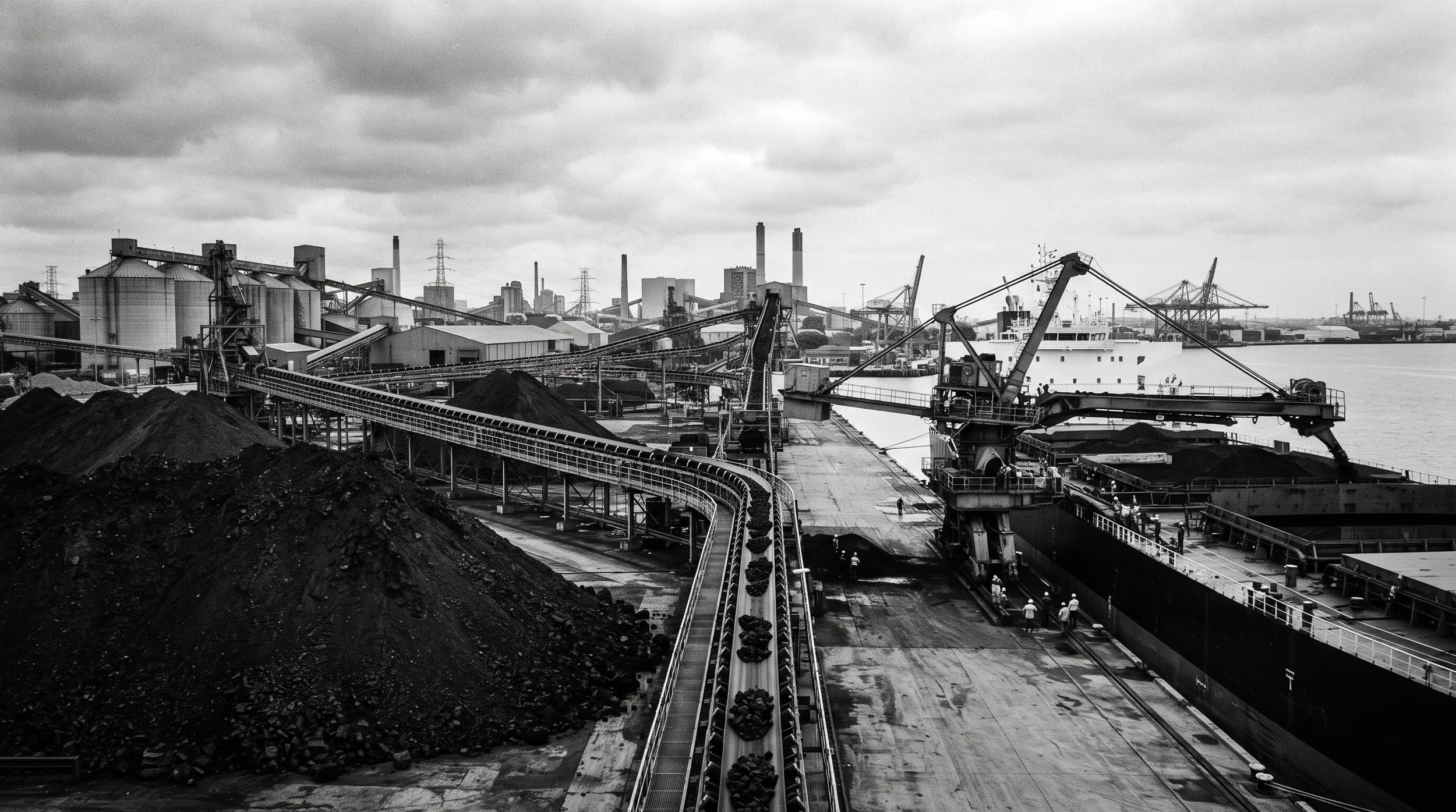
US coal exports fell to 93 million short tons in 2025, and energy cargoes still mix LCs, open account and prepayment
US coal exports were 93 million short tons in 2025, down from 108 million. Energy cargoes are financed one shipment at a time, with letters of credit, open account, prepayments repaid in oil and inventory held by a financing partner.